Where can You Build Tiny Homes?
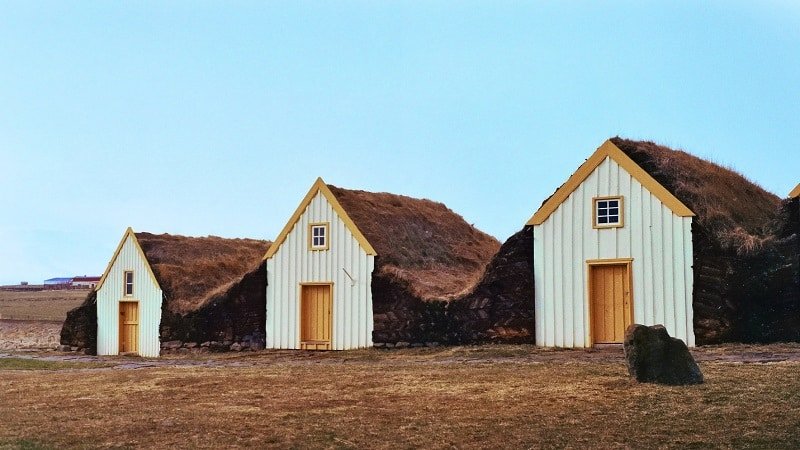
Even though the Tiny House Movement has gained massive popularity over the years, there is still much progress to be made on the legal and governmental front. The sad truth is that building a tiny home and living in it as a full-time resident is not easy – thanks to the unfriendly construction codes, zoning regulations and land policies. Therefore, in this article, we will discuss points you need to consider before deciding where can you build tiny homes.
What are the Problems?
There are only a few cities in the country that directly address the tiny homes. Most of them have minimum square footage that tiny houses fail to meet. Whether or not you can legally live in a tiny house will also depend on the tiny house you have. For example, if you have an R.V. or Tiny House on Wheels (THOW) – things will be easier for you. You will need to get your tiny home registered as an R.V., after which you can park it in an R.V. park.
However, if you want a tiny house built on a foundation, the procedure is a little more complicated. Most states do not allow you to buy a piece of land and build a tiny home on it – as unreasonable as it sounds. Instead, you can build an Accessory Dwelling Unit, a secondary residential unit located on a single-family lot. These are often referred to as a carriage house, granny flat, auxiliary unit, cottage, and even mother-in-law suite.
Understanding Zoning Regulations and Construction Codes
When it comes to building a tiny home, there are two main hurdles, and people do not quite understand their difference. The construction or building codes tell you how to build your house and are adopted from most local states’ International Residential Code (I.R.C.). So, for example, a building code will tell you the size and dimensions requirements of your house – rooms must be 70sqft, and ceilings must be at least 7 feet high.
On the other hand, zoning regulations refer to the land you will be building a tiny home on and are based on local factors. They determine what size can your house be in total, so some cities may require a house to be at least 1000sqft to be registered as a legal house. Another city may have a minimum size requirement of 1500sqft. You will have to call your local zoning department to find out more.
Where can you build tiny homes?
Due to the problems mentioned above, there are not many states that are tiny-home-friendly. And by that, we mean – states which have both building and zonings regulations that support the establishment of Accessory Dwelling Units. Technically, you cannot build a tiny house wherever you want. Below is a list of states that will accommodate your small abode.
California
No wonder California is top of the list for tiny house dwellers. Many counties of Cali, including Lake, Sacramento, Sonoma, Contra Costa and Alameda, allow Tiny Houses on Wheels as ‘caregiver dwellings’, which means you can park them in the backyard of someone who needs assistance. Fresno city recently removed the requirement for THOWs to be a caregiving unit, and they can be built as backyard cottages now.
Florida
Florida has been a very tiny house-friendly state after some recent reforms in its policies. You can both park a THOW or build a tiny house on a foundation in any of its two districts dedicated to the tiny housing community. A citizen-led initiative made it possible for the city to consider the Redevelopment Mixed Use district (R.M.U.) and the Planned Unit Development district (P.U.D.) appropriate for tiny houses.
Colorado
One of the more tiny-house-friendly states, Colorado, is home to Walsenburg. This city became the first town to amend zoning regulations for tiny houses, changing the minimum size requirement to 120-600 square feet.
Massachusetts
While not a tiny house-friendly state yet, Massachusetts is on its way to becoming one. Thanks to a local of Nantucket who pushed the city’s laws to allow people for building tiny houses. The state is now expected to approve an amendment in the zoning regulations, which will allow residential construction of under 500sqft in many districts. However, these tiny homes will need to be connected with water and electricity and fitted to fixed foundations.
Michigan
Advancing a step forward from Massachusetts, Michigan has completed its first phase of constructing a tiny house community in Detroit – the first of its kind in the state. The community is expected to accommodate low-income residents in 250-400sqft houses.
Texas
A town in Texas – Spur – declared itself the tiny house capital of America two years ago after the local government voted to remove almost all building regulations. Since then, the town has attracted many tiny house builders who have to get their designs approved and ensure hooking up the house with its electricity, water, and sewage lines.
Texas is also one of the most progressive tiny house-friendly states because many rural and remote areas are unrestricted zoning ordinances, which means these areas have very loose or no zoning regulations. You can build as you see fit.
Oregon
Finally, building a tiny home in Oregon’s Portland city is relatively easy. It is one of the very few cities in all of America that allows for and supports the establishment of A.D.U.s. The allowances have been so generous in Portland that you can build anything ranging from a whole tiny house community to a tiny house hotel here.
Our Final Thoughts
While progression toward and support for smaller dwellings is highly appreciated on local levels, there is still a long way to go for tiny houses to be accepted as permanent abodes of their own kind. Efforts are being made on the national level to include a tiny house code in the I.R.C. by tiny house advocates.
Once it gets approved and included, tiny houses will no longer have to be referred to as THOWs or A.D.U.s. However, for now, we hope this guide on where can you build tiny homes helps you decide which state or city to move to – to live in a tiny house.
